
The board asked about AI. The answer was pilots.
72% of CEOs call AI a top priority. Fewer than 15% have changed core strategy. The gap between those two numbers is where the next margin point goes.
ReadTwo years into the hold, and the plan is stale.
The value-creation plan was right on the day of the close. Nobody re-tested it. Now the sponsor wants the number and the CEO wants the room.
ReadFive months to plan. One competitor move to make it wrong.
The average mid-market planning cycle runs about five months. The market does not schedule around it.
ReadThe plan a firm wrote. And the team received.
When executives build the strategy, they own the results. When someone else builds it, they own the excuses.
Read78% of mid-market companies run strategy without a method.
Too big to be agile. Too small for the big strategy firms. Most run the most important process in the company on instinct and a template.
ReadA thirty-year horizon and a three-year problem.
Family-owned companies plan for generations and get caught by the decade. The long view is a strength until it becomes a reason not to decide.
Read40% of locations are below system average. The gap is strategic.
Franchisors treat underperforming units as an operations problem. Most of the gap is decisions the unit was never equipped to make.
ReadNew pieces, when they are published.
Short pieces from the partners. No more than twice a month. Nothing else is sent.
The terms boards and sponsors use, in plain language.
What each one is, where it usually goes wrong, and how to make it deliverable.
What is a strategy offsite, and why many change nothing.
Two days out of the office is easy to arrange. A decision the team still owns in March is harder.
What is a 100-day plan for a new CEO, and what belongs in it.
The board wants a direction. The team wants to know what changes. The first hundred days have to answer both.
What is a monthly business review, and why many only explain the variance.
The meeting many companies already hold, and the change that makes it part of the strategy.
What are franchise unit economics, and why the average hides the answer.
The system average is the one number in the room that nobody owns.
What is strategic alignment, and how to tell if you have it.
Agreement in the meeting is not alignment. The test is what each executive writes down alone.
What is an EBITDA bridge, and why most of them have no owners.
The chart most boards have seen, and the one change that makes it deliverable.
What is a value creation plan, and who should write it.
Private equity made the term standard. The question that decides whether one works is authorship.
What is a market landscape, and what it should change.
Size, growth, share, customers, competitors. Useful only if it alters a decision.
What is portfolio strategy, and why it starts with what to stop.
Where to play is half the answer. The other half pays for it.
Two books
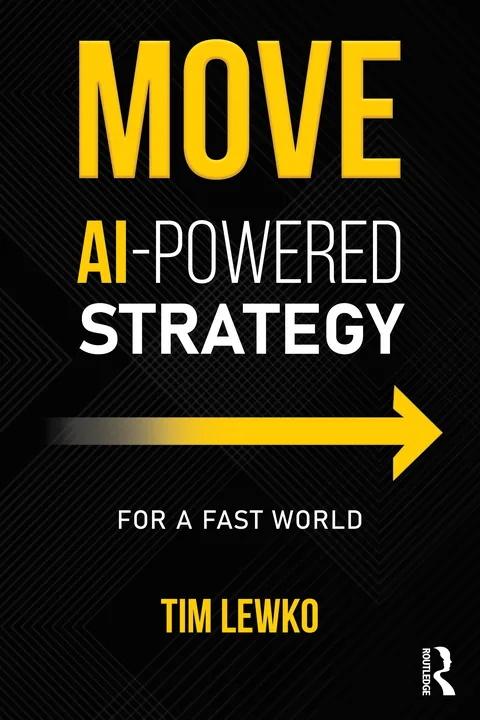
MOVE®: AI-Powered Strategy for a Fast World
Routledge, 2025. Seven tools, one page — and how AI now fits in the room.
Order on Amazon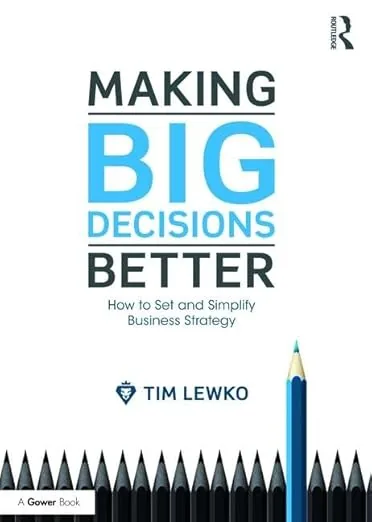
Making Big Decisions Better
Routledge. The original. How to set and simplify business strategy. The foundation that became MOVE.
Order on AmazonEight insight papers.
Each a short PDF on one question CEOs, boards and sponsors are asking.
You need a strategy. Not an AI strategy.
72% of CEOs call AI a top priority. Fewer than 15% have changed core strategy. AI is a capability, not a direction.
Read the paper (PDF) →Where strategy + AI is heading
Three waves. Wave two is now. The companies that move first separate permanently.
Read the paper (PDF) →Less time planning. More time executing.
AI compresses five-month planning cycles to weeks. The executive team gets months back in market.
Read the paper (PDF) →The speed imperative
Decision velocity is the competitive advantage. Right decisions, made quickly, with visible strategic logic.
Read the paper (PDF) →The CEO's first 100 days
A listening tour isn't a strategy. A system that produces clarity, credibility and momentum before the window closes.
Read the paper (PDF) →The mid-market strategy gap
Too big to be agile. Too small for the big firms. 78% rely on internal teams with no method.
Read the paper (PDF) →What PE firms know that corporate boards don't
Hold-period discipline forces focus. Five things sponsors demand that most boards never impose.
Read the paper (PDF) →Why every franchisor needs localised decision making
40%+ of franchise locations underperform the system average. The gap is strategic, not operational.
Read the paper (PDF) →From the archive
Earlier pieces from the previous site.
143 pieces by Tim Lewko and Scott Newton, 2012 to 2026, kept as written and dated.
Browse the archiveIn the media
Tim Lewko on strategy and the mid-market. Watch
Tim Lewko on strategy and value creation. Watch
A full conversation on MOVE® and AI-powered strategy. Watch · Spotify · Transcript
Global recognition for advancing strategic management. Watch
What is in front of you this quarter?
A senior partner reads it. One page back within five working days: what we see, three questions for your team, a straight answer on fit. Confidential.
Or start alone: the five questions (PDF)Or take the ten-question scorecard